Trade
UAE–Senegal Economic Ties: Why Senegal Matters in the Emerging UAE–West Africa Corridor
·Emirates News Agency (WAM) — UAE Ministry of Foreign Trade, Dakar visit
A UAE ministerial delegation was received in Dakar in September 2026, and the published trade numbers behind that visit are moving quickly. This analysis separates what has actually been agreed from what has been announced — and sets out what companies should examine before treating Senegal as a West African entry point.
Non-oil trade between the UAE and Senegal grew 24.5 per cent to approximately US$1.3 billion in 2025, and bilateral trade in the first half of 2026 exceeded US$751 million. This article examines what is verified, what remains an intention, why Senegal matters in a UAE–West Africa corridor, where the limits of the gateway argument lie, and what companies should validate before committing capital.
01
What changed
On 4 September 2026, President Bassirou Diomaye Diakhar Faye received Dr Thani bin Ahmed Al Zeyoudi, UAE Minister of Foreign Trade, and an accompanying UAE delegation in Dakar. According to the Emirates News Agency, the discussions covered trade flows, mutual investment and closer engagement between the two business communities, with priority sectors identified as mining, renewable energy, infrastructure, food security and logistics.
The delegation also met Prime Minister Ahmadou Al Aminou Mohamed Lo and Cheikh Oumar Seck, Minister of Mines and Geology, alongside business-to-business meetings between UAE and Senegalese company representatives.
The figures published with that visit are the substantive part. Al Zeyoudi stated that non-oil trade between the UAE and Senegal grew 24.5 per cent to approximately US$1.3 billion in 2025, and that bilateral trade in the first half of 2026 surpassed US$751 million — 31 per cent higher than the same period in 2025.
This follows a December 2025 ministerial visit to Dakar during which 13 memoranda of understanding were signed across energy, logistics, mining, industrial development, digital technologies, construction and healthcare. Memoranda are statements of intent. They are not binding investment commitments, and the UAE has not published contract values or completion dates for them.
Information checked: September 2026. This is market intelligence, not legal, tax or financial advice.
02
Read the categories separately
Coverage of UAE–Africa engagement routinely blends four different kinds of statement into a single impression of momentum. They carry very different weight, and companies that plan against the wrong category lose time.
- Trade statistics
Recorded flows that already happened. The 2025 and H1 2026 UAE–Senegal figures above sit here and are the firmest evidence available.
- Signed agreements
Binding instruments with defined parties and obligations. A concluded trade agreement in force belongs here; the UAE and Senegal do not currently have one.
- Announced agreements and MoUs
The 13 MoUs from December 2025. Direction of travel, not committed capital.
- Forward-looking targets
Ambitions and projections stated by governments or companies. Useful for reading intent; not a basis for a business case.
03
Why Senegal matters strategically
Senegal is a coastal Atlantic economy of roughly 19.7 million people, positioned at the western edge of the continent and inside the West African Economic and Monetary Union, whose members share the CFA franc — a currency pegged to the euro. For a UAE-based operator, that combination is unusual in the region: Atlantic port access, a monetary union that removes exchange-rate risk across several neighbouring markets, and a francophone administrative and legal environment distinct from anglophone Ghana or Nigeria.
Senegal has also become a hydrocarbon producer in the current cycle, which is what changed the country's profile with Gulf investors. That does not make it a stable macro story. Since 2024, Senegal has been working through a debt disclosure crisis: the IMF now estimates previously unreported debt at more than US$11 billion, the debt-to-GDP ratio rose to around 130 per cent, and the previous IMF programme was suspended.
On 1 September 2026, IMF staff and the Senegalese authorities reached a staff-level agreement on a new Extended Credit Facility arrangement supporting a 2026–2029 reform programme — reported at approximately US$2.2 billion over 36 months — subject to Executive Board approval and to corrective measures on data misreporting. The IMF projects real GDP growth of 2.2 per cent for 2026.
Both things are true at once: rising bilateral trade and an economy under an active fiscal adjustment programme. A company that reads only the first will misprice the second.
04
Sectors with evidence behind them
The sectors named by both governments are consistent across the December 2025 and September 2026 visits. Below is what is actually documented in each, rather than what is aspirational.
- Ports and logistics
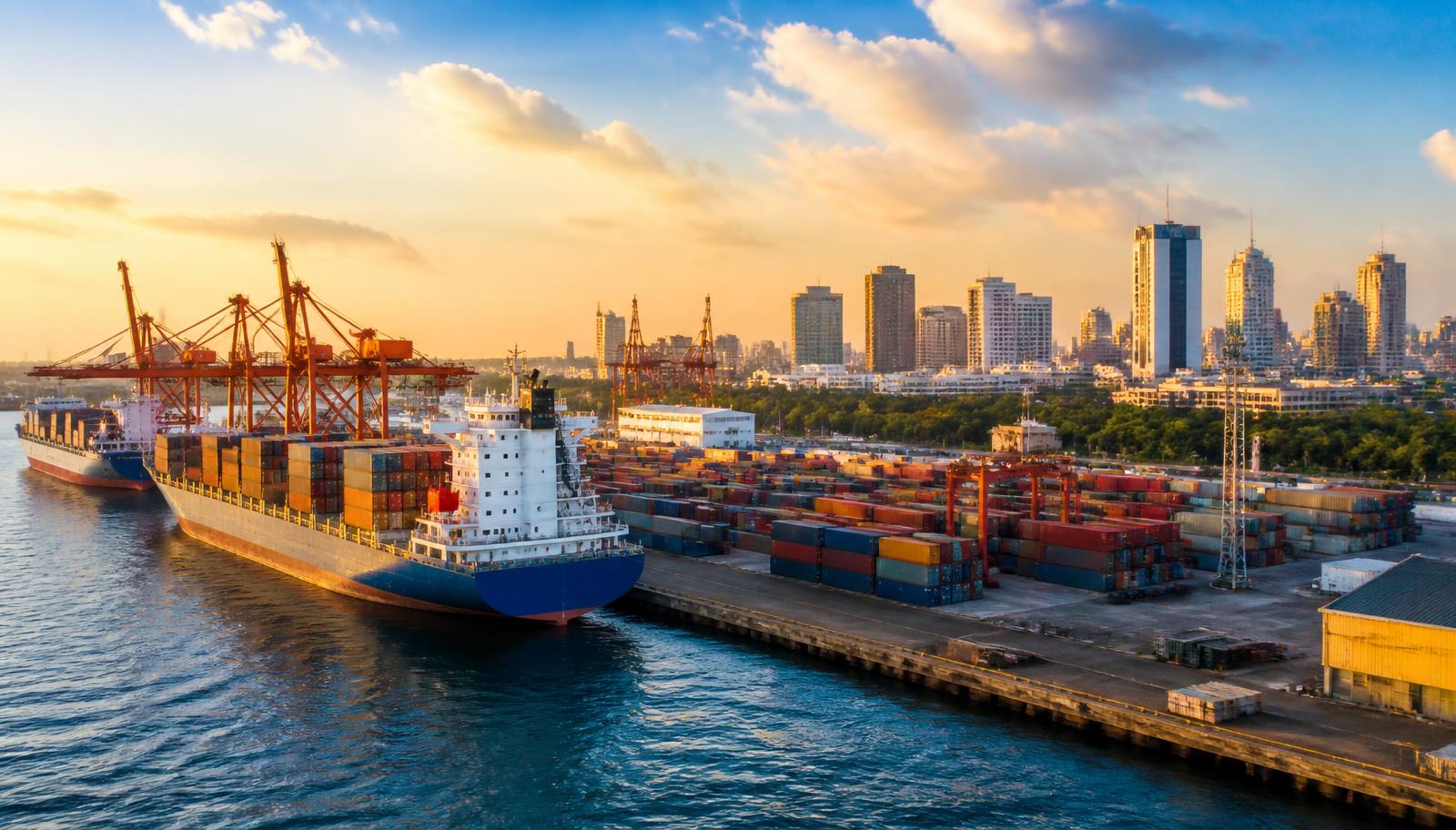
The clearest committed UAE capital in Senegal. DP World is developing the Port of Ndayane, roughly 50 km south of Dakar, with the Government of Senegal and British International Investment. Phase 1 is an 840-metre container quay, an 18-metre draft, a 5-km access channel and 1.2 million TEU of annual capacity, with completion targeted for 2028. DP World announced on 27 July 2026 that major dredging was completed 13 months ahead of schedule, with more than 1,000 people employed directly on site. DP World also operates DP World Dakar, currently Senegal's only container terminal.
- Mining and minerals
Named as a priority in both visits, and the September 2026 delegation met the Minister of Mines and Geology directly. No specific UAE mining investment values have been published in the official statements, so treat this as an area of stated interest rather than deployed capital.
- Renewable energy
A consistent priority sector in both governments' statements and in the December 2025 MoUs. Again, announced scope rather than published project financials.
- Food security and agriculture
Explicitly named in both visits, and the December 2025 delegation met Senegal's Minister of Agriculture, Food Sovereignty and Livestock. This aligns with the UAE's broader food-security sourcing agenda and with Senegal's own processing ambitions.
- Digital, industry, construction, healthcare
Covered within the 13 December 2025 MoUs. No individual project detail has been published.
05
Senegal as a gateway — and the limits of that claim
Senegal is frequently described as a gateway to West Africa. The infrastructure case for that is real: a deep-water Atlantic port able to take the largest container vessels changes the transhipment economics of the sub-region, and Senegal's WAEMU membership does give tariff and currency continuity across several neighbouring markets.
The commercial case is narrower than the phrase suggests, and the difference matters when you are budgeting a regional plan.
ECOWAS membership and WAEMU membership are not the same thing, and neither delivers a single regulatory market. Product registration, sector licensing, labour rules, tax administration and public procurement remain country-by-country. A licence obtained in Dakar does not carry into Abidjan, Accra or Lagos.
Language and legal tradition split the region. Senegal operates in French within a civil-law and OHADA framework; Ghana and Nigeria operate in English within common-law frameworks. Distribution agreements, employment structures and dispute resolution are drafted differently in each, and the same regional strategy usually needs two legal workstreams, not one.
The political environment across the wider Sahel and coastal West Africa is not uniform either. Companies planning regional expansion out of Dakar should test each destination market independently rather than inheriting Senegal's risk profile across all of them.
The practical conclusion is that Senegal can be an excellent first market, a strong logistics base, and a poor proxy for the region as a whole — all simultaneously. It is a gateway for freight more reliably than it is a gateway for regulatory access.
06
The corridor view: where Senegal sits alongside Ghana
Senegal is one node in a wider UAE–West Africa build-out, not the whole of it. The UAE has concluded 38 Comprehensive Economic Partnership Agreements since the programme launched in September 2021, of which 18 were in force as of mid-2026, and its African coverage includes agreements with Kenya, Angola, the Central African Republic, the Republic of the Congo and Sierra Leone, with Ghana, Rwanda and Zambia reported to be in advanced negotiation.
For a company operating from the UAE, that produces a practical planning question: which West African market do you actually enter first, and on what basis? Senegal offers francophone Atlantic access, WAEMU currency continuity and the Ndayane logistics build. Ghana offers an English-language legal environment, a deeper professional-services base in Accra, host status for the AfCFTA Secretariat and an investment framework that was reformed in 2026. Neither is a default answer.
The honest comparison is sector-specific. A food-processing or bulk-logistics business may find Senegal's port economics decisive. A technology, services or professional-services business may find Ghana's language and contracting environment materially cheaper to operate in. Our companion analyses cover the Ghana entry routes in detail and the wider question of evaluating African markets on evidence rather than narrative.
07
What this means for UAE-based and international companies
The trade growth is real and it is compounding — 24.5 per cent in 2025 and 31 per cent in the first half of 2026 are not marginal moves. But growth in bilateral trade is an indicator of corridor activity, not evidence that any specific business will work.
Three groups should read this differently.
- Exporters and traders
Rising non-oil trade and improving port capacity reduce friction on physical goods. The question to test is landed cost and distribution reach, not headline trade growth.
- Investors and project developers
Government-to-government momentum improves access, but the IMF programme, the debt restructuring process and Senegal's fiscal position sit directly upstream of payment security on public contracts. Counterparty risk needs pricing explicitly.
- Technology and services companies
Nothing in the published record removes the ordinary requirements of market entry — local presence questions, regulated activity, contracting language and payment collection. The corridor makes the market easier to reach, not easier to operate in.
08
What to validate before market entry
The following is a validation sequence, not a checklist to complete after incorporating. Each item can change whether the market is viable at all.
- 01Evidence of demand from named buyers
- 02Entry model: direct, distributor, JV or project
- 03Sector licensing and reserved activities
- 04Legal form under OHADA and local company law
- 05Banking, FX and repatriation mechanics
- 06Counterparty and payment security
- 07Local execution capability on the ground
09
A note on scope and sourcing
Every figure in this article is attributed to a named source below: official UAE government communications for the bilateral trade data and visit outcomes, DP World's own announcements for the Ndayane project parameters, and the IMF for Senegal's macro-fiscal position. Claims circulating on social platforms that we could not verify against a primary or authoritative source have been omitted rather than repeated.
Announced agreements and memoranda are described as such throughout. Nothing here should be read as a projection of returns, a guarantee of outcome, or investment, legal or tax advice. Companies should take independent Senegalese legal and tax advice on their specific activity before committing capital.
ORTERRA Perspective
Africa is not one market. Senegal is not West Africa, and West Africa is not Africa. A corridor that is growing in aggregate tells you almost nothing about whether your specific business works in a specific country, in a specific sector, with a specific counterparty.
What separates announced opportunity from operating business is the same everywhere: Market × Technology × Capital × Local Execution. Remove any one factor and the result is zero, regardless of how strong the bilateral headline looks.
Senegal currently has genuine market demand signals, real committed infrastructure capital in the port, and government-level access. What most foreign entrants underestimate is the fourth factor — the on-the-ground capability to register, contract, staff, distribute, get paid and stay compliant in a francophone OHADA environment.
Our view is that Senegal deserves to be on the shortlist for companies with a physical goods, logistics, agri-processing or energy proposition, and that it should be tested against Ghana and other regional options on sector-specific evidence rather than chosen because a corridor is in the news.
Explore the opportunity
Evaluating Senegal or the wider West African corridor?
If your company is weighing Senegal, Ghana or another West African market as an entry point, start with the evidence and the entry model rather than the entity. Tell us what you are trying to achieve and we will identify the next practical step.
Sources
Emirates News Agency (WAM) — President of Senegal receives Al Zeyoudi in Dakar
Official UAE state news agency report of the 4 September 2026 Dakar visit: meeting with President Bassirou Diomaye Diakhar Faye, Prime Minister Ahmadou Al Aminou Mohamed Lo and the Minister of Mines and Geology; priority sectors of mining, renewable energy, infrastructure, food security and logistics; and Al Zeyoudi's statement that non-oil trade grew 24.5% to approximately US$1.3 billion in 2025 with H1 2026 bilateral trade above US$751 million (+31% year on year).
Tier 1 — Government / public authority
WAM copy carried by Aletihad, 4 September 2026.
View source →Emirates News Agency (WAM) — UAE strengthening economic ties with Senegal
Report of the 11 December 2025 UAE ministerial visit to Dakar: 13 memoranda of understanding signed across energy, logistics, mining, industrial development, digital technologies, construction and healthcare; non-oil trade of US$933 million in the first nine months of 2025, up 21.1% year on year.
Tier 1 — Government / public authority
Memoranda are statements of intent; no contract values were published.
View source →DP World — Dredging completed ahead of schedule at Senegal's Port of Ndayane
First-party announcement dated 27 July 2026: completion of major dredging 13 months ahead of schedule, a 5-km navigation channel, turning basin and berth pocket, more than 1,000 people employed directly, and a planned port completion in 2028.
Tier 2 — First-party corporate announcement
View source →DP World — Ports and Terminals in Senegal
Project parameters for the Port of Ndayane: developed with the Government of Senegal and British International Investment, approximately 50 km south of Dakar; Phase 1 comprising an 840-metre container quay, 5-km access channel, 18-metre draft and 1.2 million TEU annual capacity, expected completion by 2028; DP World Dakar described as the only container terminal in Senegal with a 700-metre quay.
Tier 2 — First-party corporate announcement
View source →International Monetary Fund — Staff-level agreement on an Extended Credit Facility with Senegal
IMF press release dated 1 September 2026: staff-level agreement on a new Extended Credit Facility arrangement supporting the authorities' 2026–2029 reform programme, aimed at restoring macroeconomic stability and debt sustainability; subject to IMF Executive Board approval.
Tier 1 — Government / public authority
Reported at approximately US$2.2 billion over 36 months; Board approval pending at the time of writing.
View source →International Monetary Fund — Senegal country page
Projected 2026 real GDP change of 2.2 per cent, projected 2026 consumer price change of 2.5 per cent, and country population of 19.7 million.
Tier 1 — Government / public authority
View source →Reuters — Senegal's hidden debt crisis and attempts to resolve it
Timeline of the debt disclosure crisis from the 2024 discovery of previously unreported debt, the suspension of the prior IMF programme and subsequent credit rating actions; IMF estimate of more than US$11 billion in additional debt and a debt-to-GDP ratio of around 130 per cent.
Tier 3 — Reputable media (context)
View source →The National — UAE set to conclude up to seven CEPAs by end of year
UAE Minister of Foreign Trade statement on the CEPA programme: 37 agreements signed as of July 2026 with 18 in force, and advanced negotiations with Ghana, Rwanda, Zambia, Canada, Peru and Bangladesh. Used to establish that no UAE–Senegal comprehensive trade agreement is in force at the time of writing.
Tier 3 — Reputable media (context)
View source →